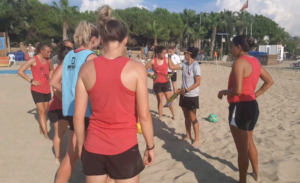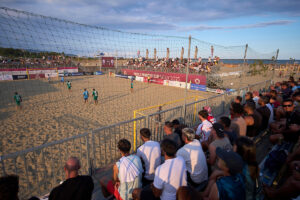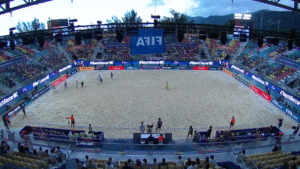
This feature is adapted from “Harnessing the Benefits of Training on Sand” by Luisa Meza, originally published on Womens Soccer Coaching. It explores how sand-based training and beach soccer environments can enhance football performance through strength, endurance, technical refinement, and injury resilience.
A Different Kind of Football Classroom
On most days, Luisa Meza is not thinking about training methodologies or performance frameworks. She is thinking about the sand.
It shifts under every step. It never behaves the same way twice. It absorbs force, resists movement, and removes the comfort of certainty that grass or artificial turf quietly provides. For Luisa, a professional beach soccer player with the Portuguese national setup, that instability is not a limitation; it is the lesson.
She often describes sand less as a surface and more as a constant test of control, balance, and decision-making.
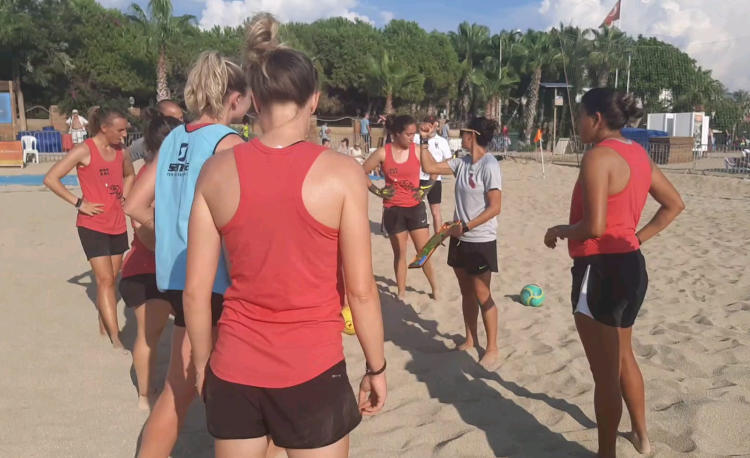
Life in Beach Soccer: A Game of Constant Instability
Beach soccer is played with four outfield players and a goalkeeper. The game is fast, technical, and physically demanding, where time and space disappear almost immediately.
Every touch matters. Every movement is under pressure. There is no stable footing, no predictable bounce, and no moment of comfort. It is football stripped down to its most reactive form.
For Luisa, this environment is not just competition, it is education.
From Resistance to Adaptation
When she first began serious training on sand, the adjustment was immediate.
Movements that once felt automatic, accelerating into space, changing direction, and striking the ball cleanly, suddenly required full concentration. Nothing could be done passively. Every action demanded intention.
Over time, what felt like resistance began to reshape how she moved, thought, and trained.
The sand was no longer slowing her down. It was rebuilding her foundations.
Why Elite Footballers Train on Sand
The benefits of sand training are not limited to beach soccer. Across elite football, it has become a recognised conditioning tool.
Players such as Lionel Messi, Neymar Jr, and Sergio Ramos have all integrated sand-based work into parts of their physical preparation at different stages of their careers.
It is not used as a replacement for pitch training, but as an additional layer, one that increases physical demand while sharpening technical control.
Physical Benefits of Sand Training
Strength Development Under Load
Sand forces the body to work harder with every movement. Running, jumping, and turning require greater force output, activating stabilising muscles that are less engaged on firmer surfaces. Over time, this builds functional strength that transfers directly into match performance.
Low-Impact Conditioning and Mobility
Unlike harder pitches, sand reduces impact stress on joints. This allows for higher-volume movement training while supporting joint health, mobility, and long-term durability.
Endurance Through Natural Resistance
Because every action requires more energy, cardiovascular demand increases quickly. Even technical drills double as conditioning work, improving both aerobic and anaerobic capacity.
Technical Development: The Barefoot Advantage
One of the most distinctive aspects of sand training is its effect on technique.
Luisa often trains barefoot. Without studs or structural support, the foot becomes more sensitive and reactive. The ball must be guided rather than struck aggressively. Control becomes about touch, timing, and feel.
Over time, players develop a more complete understanding of the foot’s surface areas and how to manipulate the ball under pressure.
These adaptations carry directly into traditional football environments.
The Psychological Edge of Sand Training
Despite its physical intensity, sand training often feels less structured and more playful.
Music, open space, and group interaction create an environment that encourages creativity. Younger players, in particular, often remain engaged and motivated even while working at high intensity.
The surface disguises the workload, but the body does not.
Why Sand Produces Better Footballers
Sand training strips football back to its core demands: balance, decision-making, and control under uncertainty.
There are no perfect conditions. Every movement must be adjusted. Every action must be earned.
For Luisa Meza, this is why it remains a core part of her development and identity as a player. Not because it is easier. But because it is honest.
About the Author
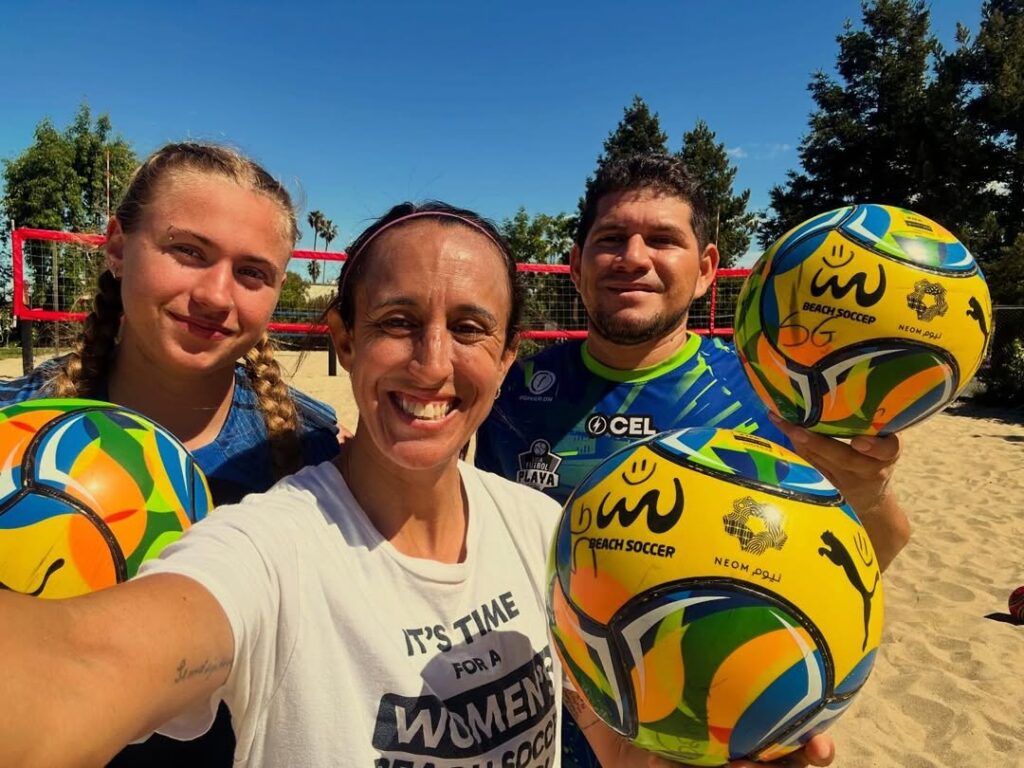
Luisa Meza is a professional beach soccer player representing the Portuguese Women’s National Team and Cali Beach Soccer Club in San Francisco. Her work spans international club competition and elite performance environments, with a focus on technical mastery, physical development, and beach soccer methodology.
Click here to follow Luisa on Instagram